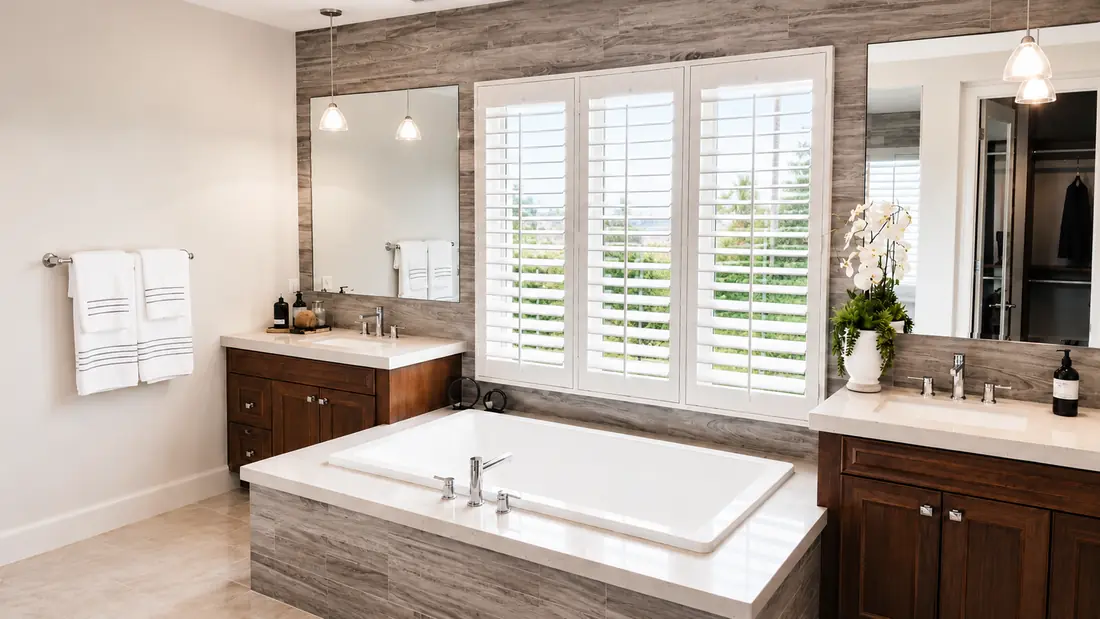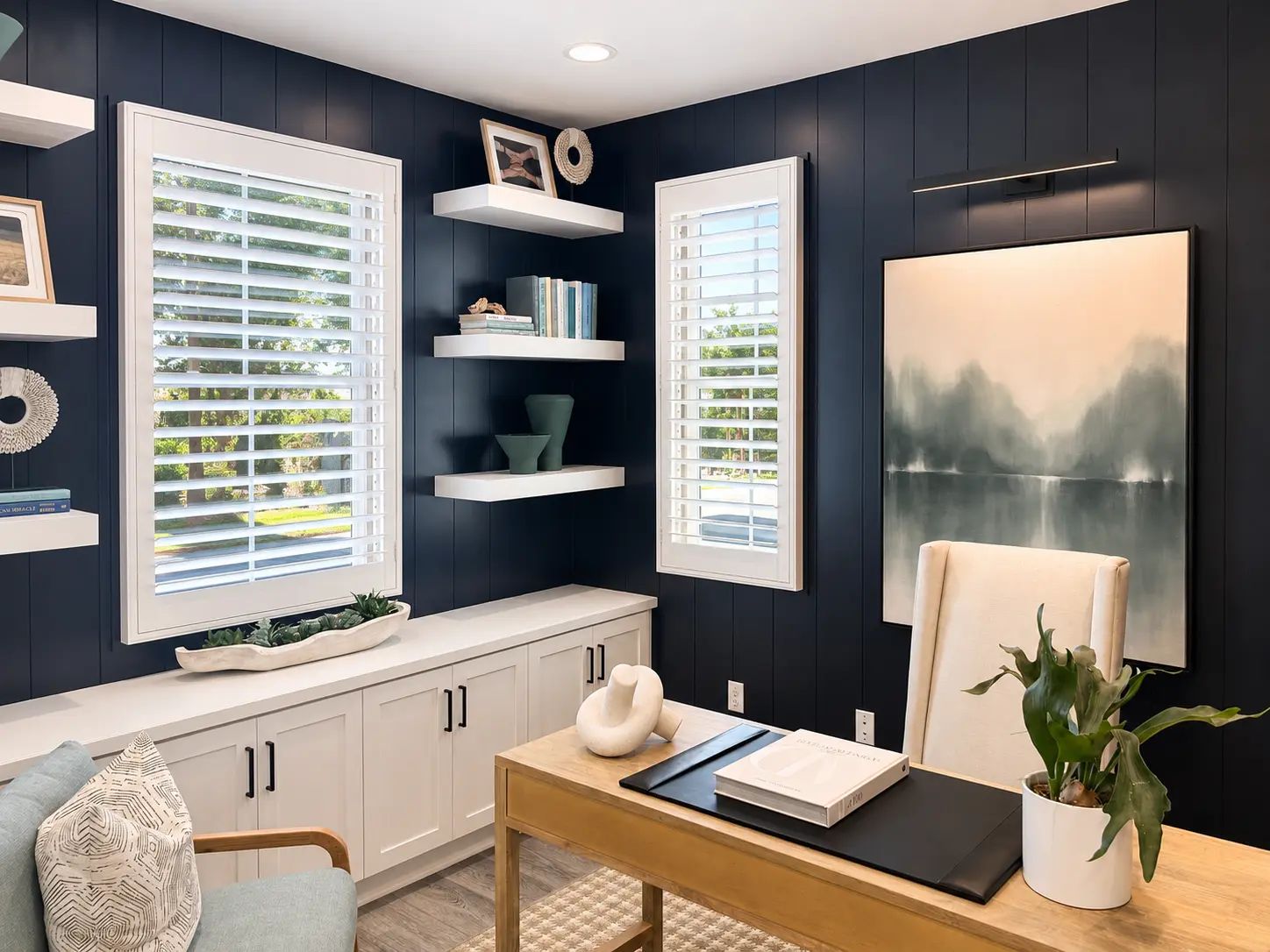
Polylux shutters
A wood frame for strength, polyurethane-protected louvers for moisture. Built for tall, wide windows in homes where both matter.
Designed in-house, built in-house
Polylux isn't a stocked product, and no one else builds it. Our team developed it for a specific problem: a tall, wide window in a home with real moisture exposure. Most people would choose wood. It's the furniture material: the structure, the finish, the feel. They settle for poly because they're told moisture forces it. And most assume poly is the strong material. It isn't. Poly is synthetic, heavier than wood, and far more flexible, closer to rubber than lumber, so on a big opening it won't hold a wide panel straight. Wood gives a shutter its structure. Polyurethane-protected louvers handle the moisture. On a large, exposed window you need both, so we built a shutter that is both, then undercoated and painted the whole panel in our own spray booth to a furniture-grade finish. A typical poly shutter isn't painted at all.
Best for
Tall, wide windows with real moisture exposure. Coastal homes, and rooms where the windows stay open. In a small or heavily used bathroom, standard poly is the right call.
Why polylux shutters
Wood is the strength
Poly flexes. On a tall or wide opening it can't hold a panel straight, which is why all-poly shutters get broken into narrow sections. A wood frame carries the load, so we build wide panels with fewer breaks across the glass.
Polyurethane-protected louvers
The louvers are the part exposed to moisture. A polyurethane shell keeps them from cracking or splitting where a wood louver would be at risk.
The wood shutter you wanted
Most people choose poly because they think moisture rules out wood. Polylux is a real wood frame, painted to a furniture-grade finish. You don't give up the wood to get the moisture protection.
Furniture-grade finish
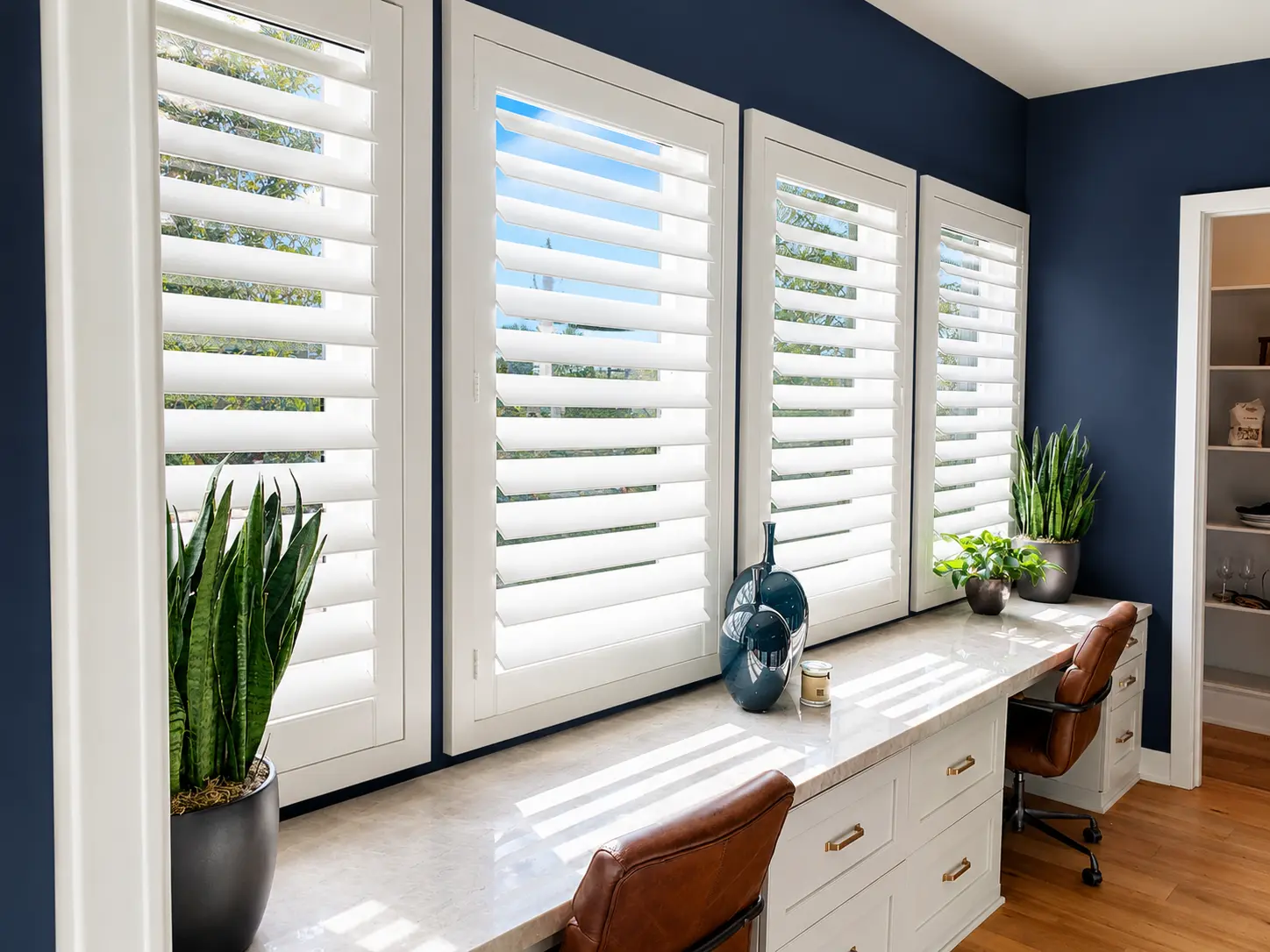
30-sheen satin coating reflects light like fine cabinetry. Smooth to the touch, not flat or chalky.
Custom color matching
Color-matched to blend seamlessly with your cabinetry, trim, and interior finishes. Finished in our own spray booth, not pulled from stock.
Precision joinery
Mitered corners, mortised hinges, rabbeted panels: details that close light gaps and feel right under your hand.
Easy to clean
The satin finish wipes down with a damp cloth. No special products, no streaks, no buildup in the louvers.
Design options
Classic louvered panels, or a clean shaker-style flat panel for a more modern look. Both are custom-built and color-matched, so Polylux fits traditional and contemporary homes alike.
Built for every window
Whatever the shape, we measure and build to fit. A few of our most-requested styles.
Clearview
No visible tilt rod. A hidden mechanism gives full light control and a clean, modern face.
Read more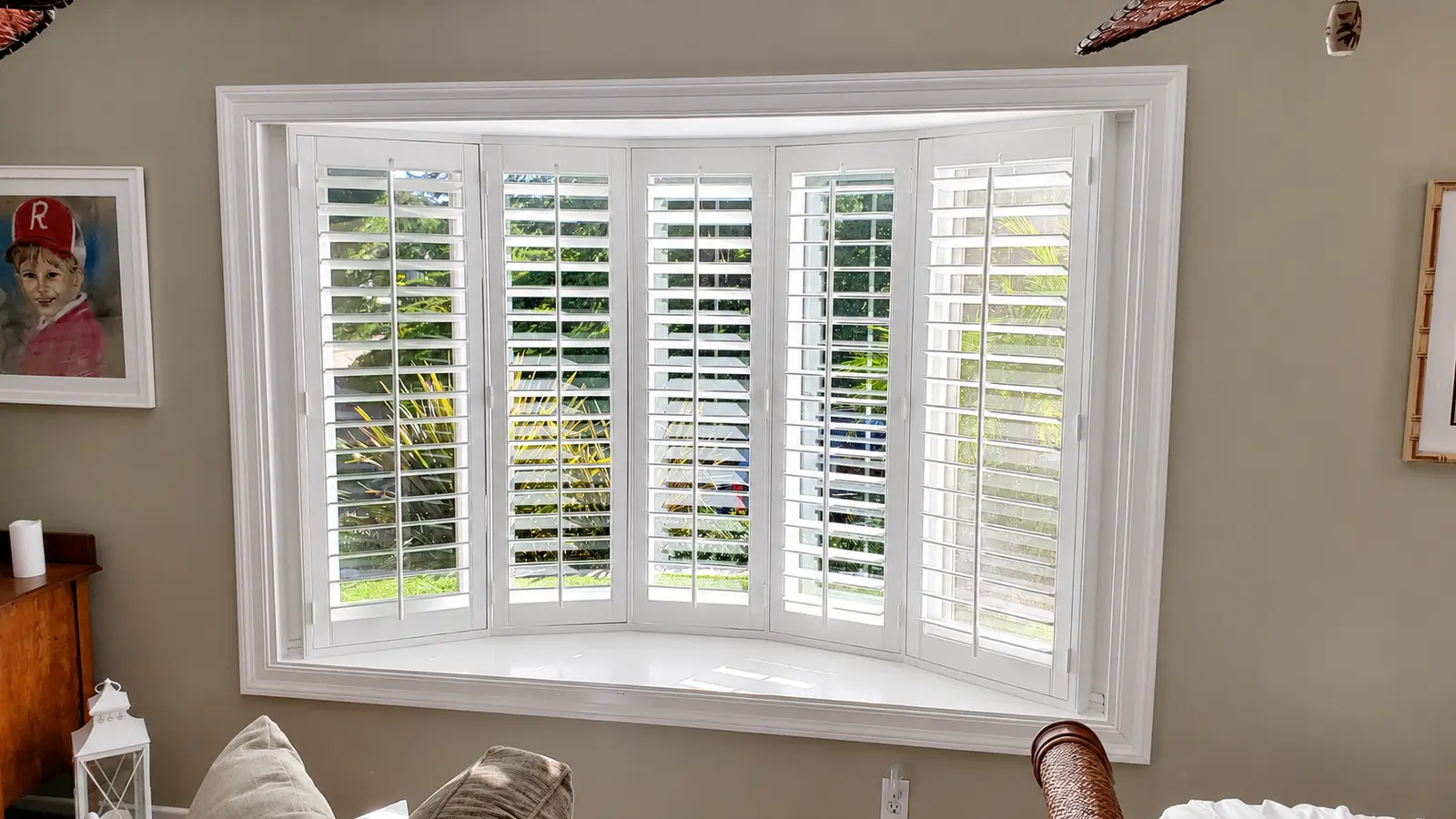
Traditional
Center tilt rod, symmetrical design. The classic plantation look, in any room.
Read more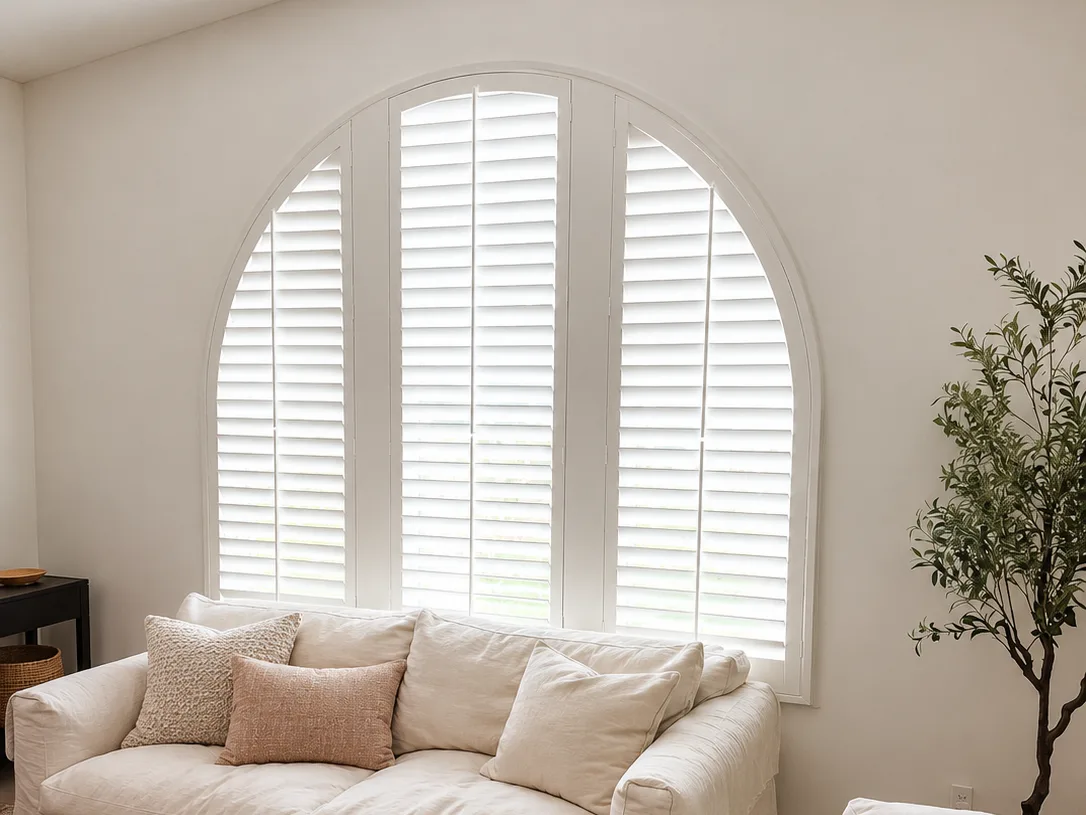
Arched
Cut to follow the curve of your arched windows exactly, preserving the architecture.
Read more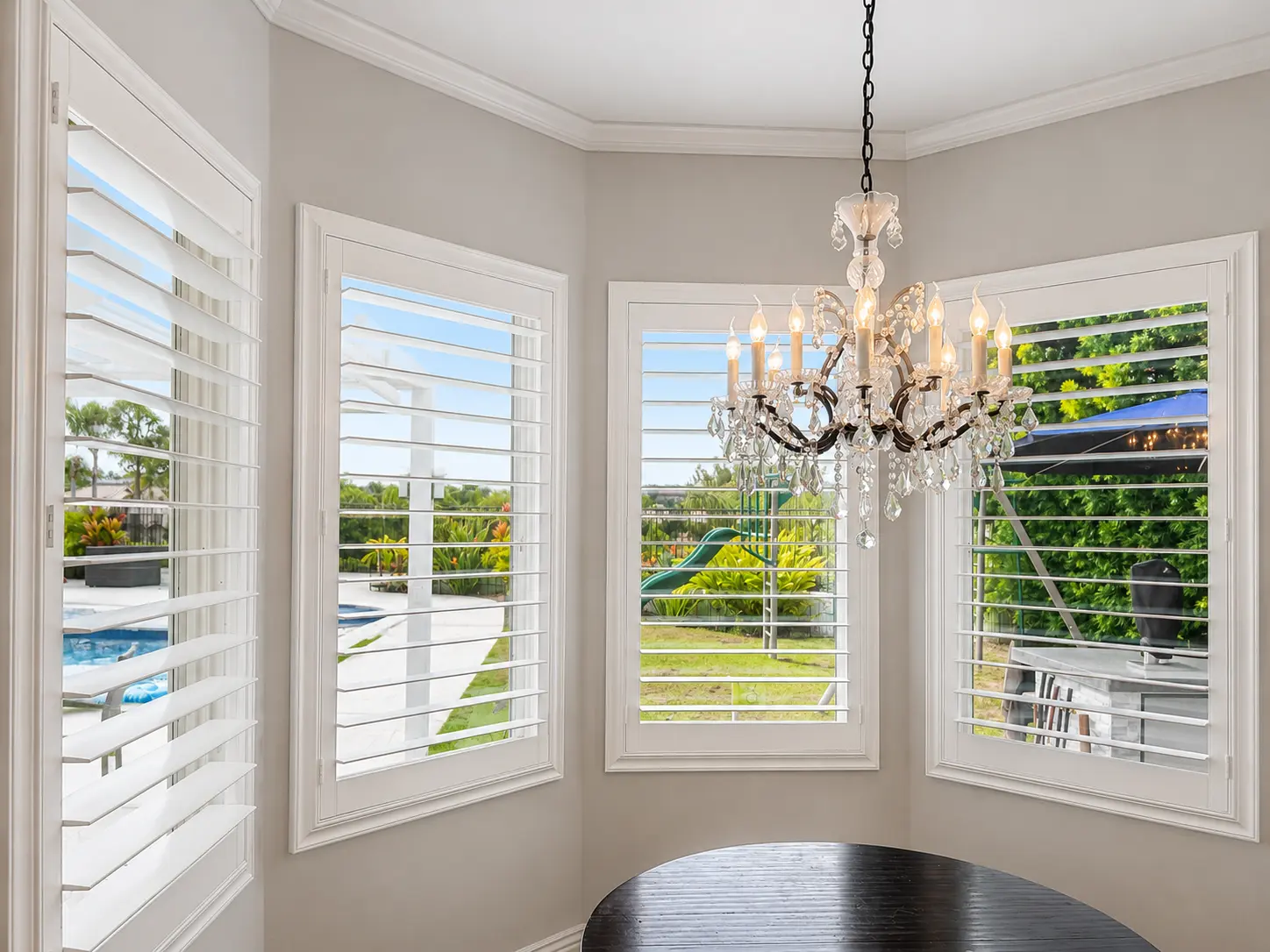
Bay windows
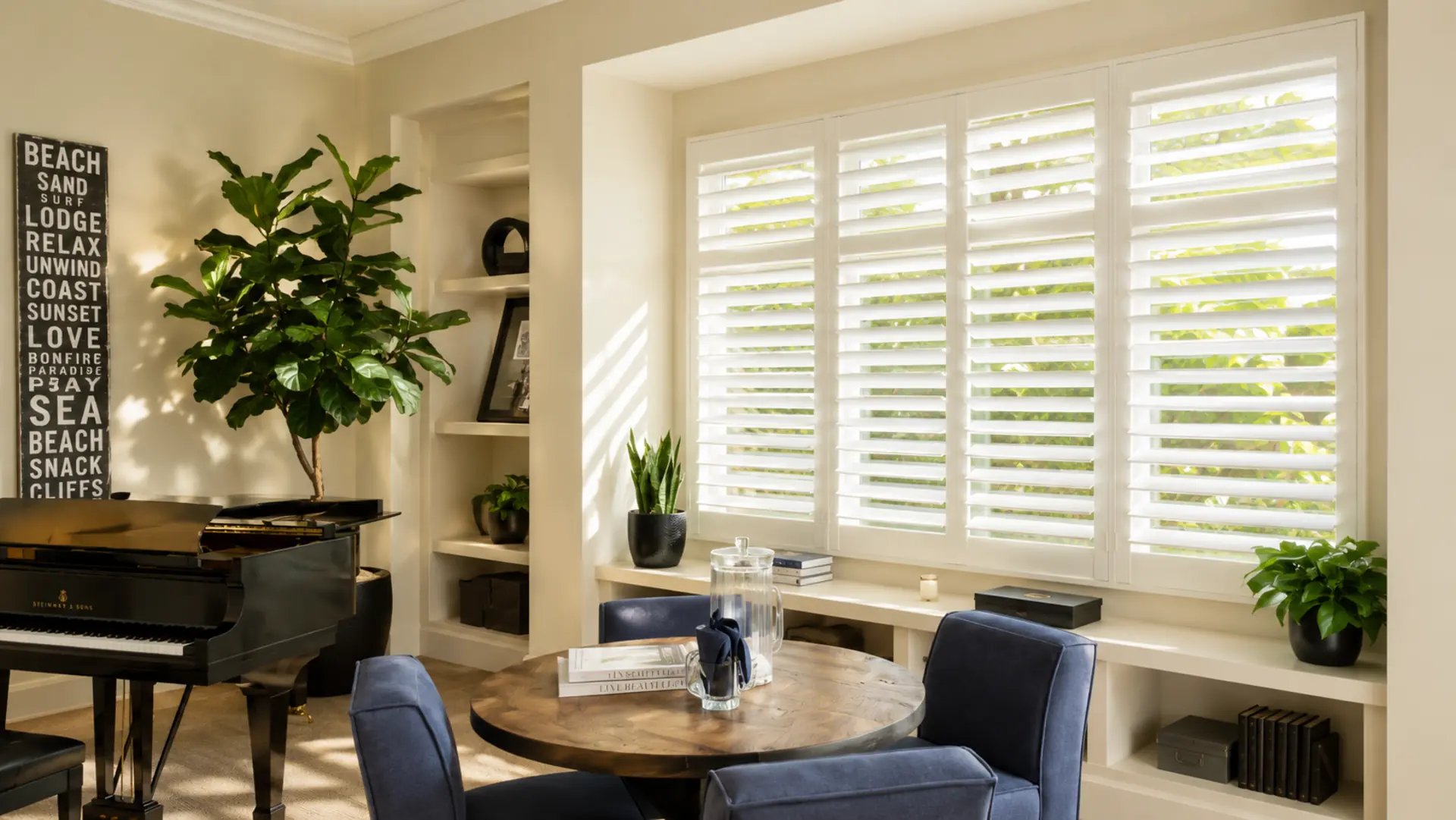
Built to your bay's exact angles and dimensions. A clean, unified look that highlights the space.
Read more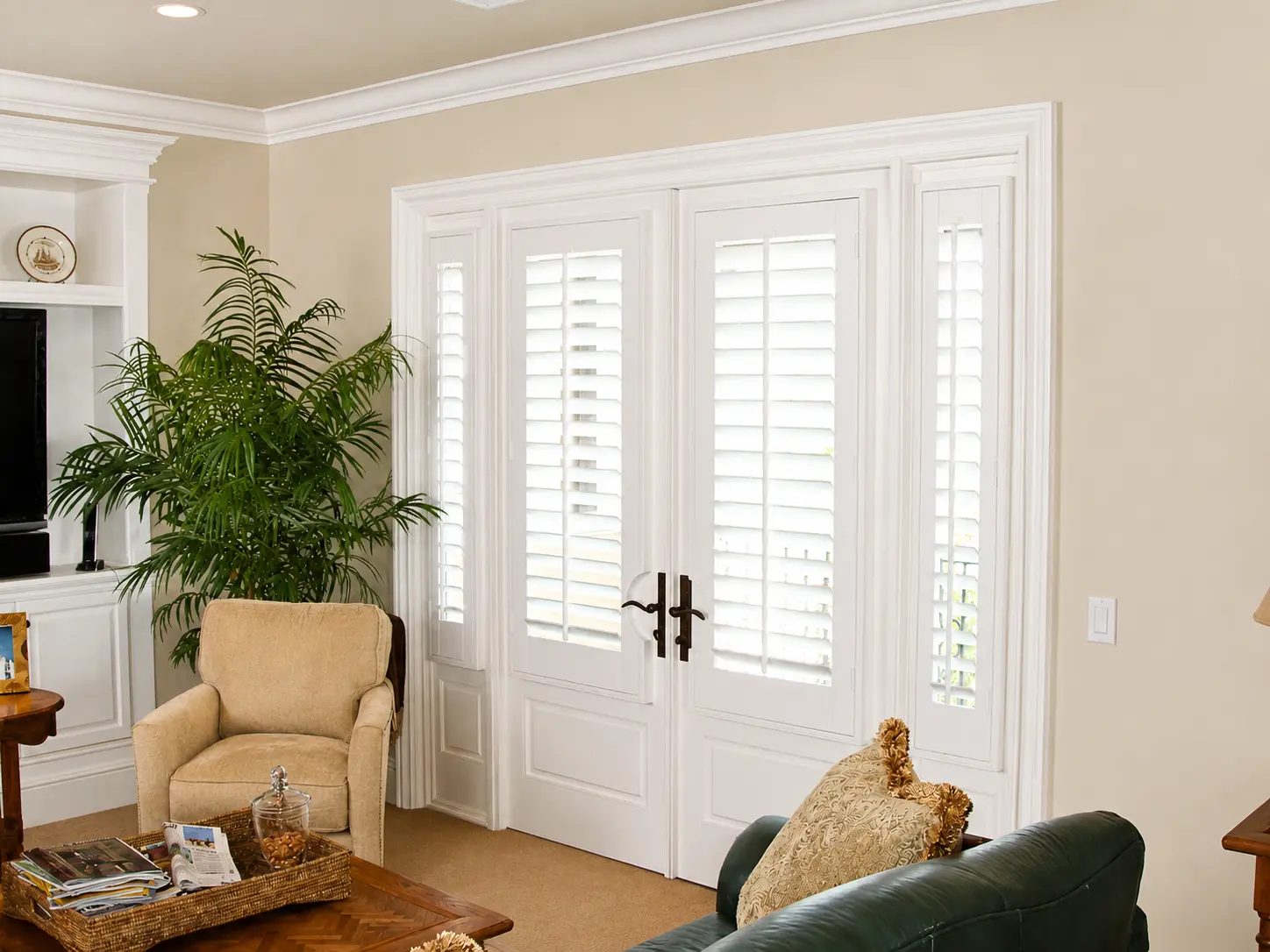
French doors
Cut-outs for handles and locks, sized to open and close with the doors. Privacy plus function.
Read more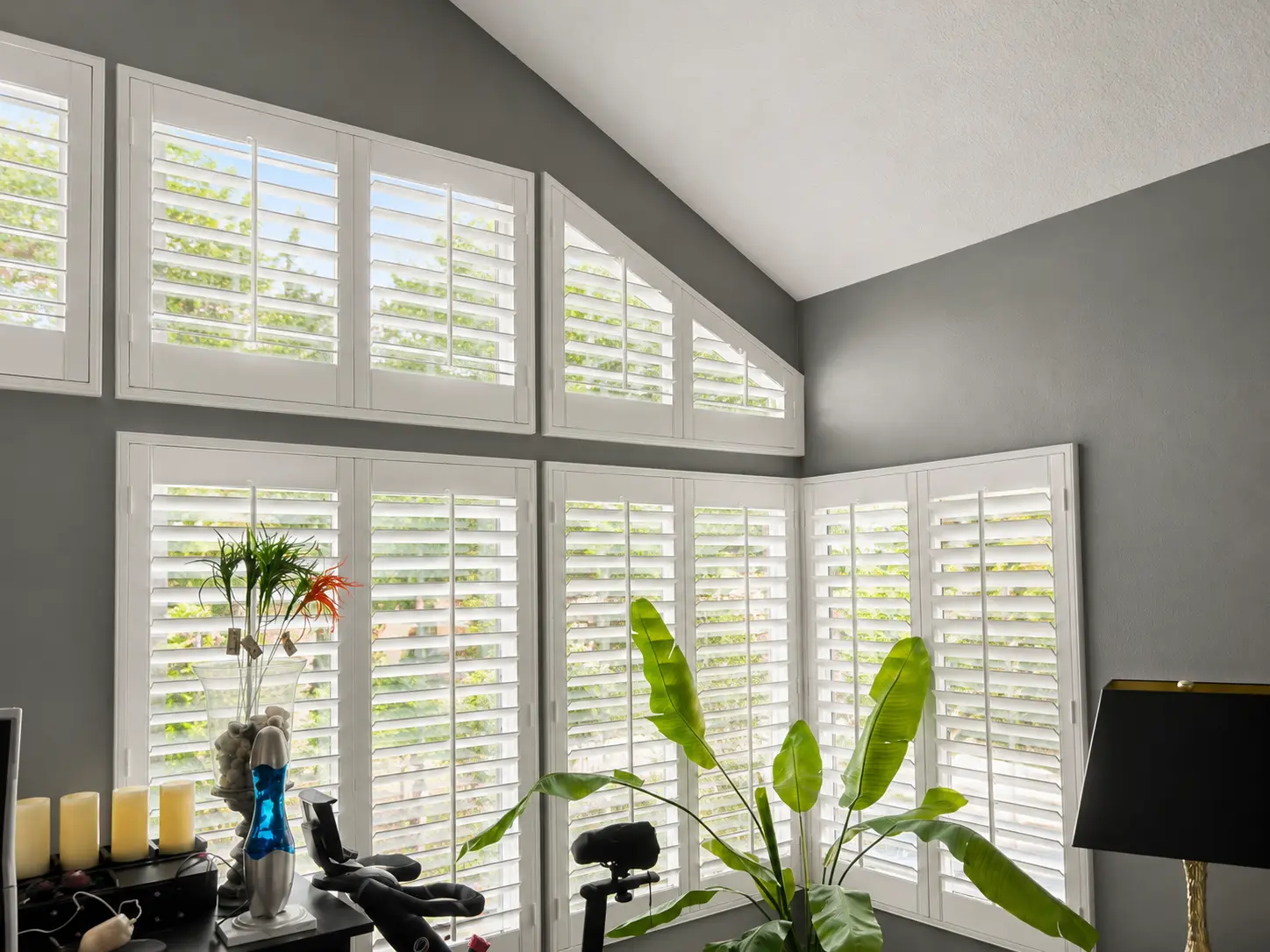
Specialty shapes
Circles, hexagons, angles, half-moons. We mill the panel to fit any opening you can frame.
Read moreModern minimalist
Flat-edge panels with a smooth face. None of the beaded rails or lines of a traditional shutter.
Read more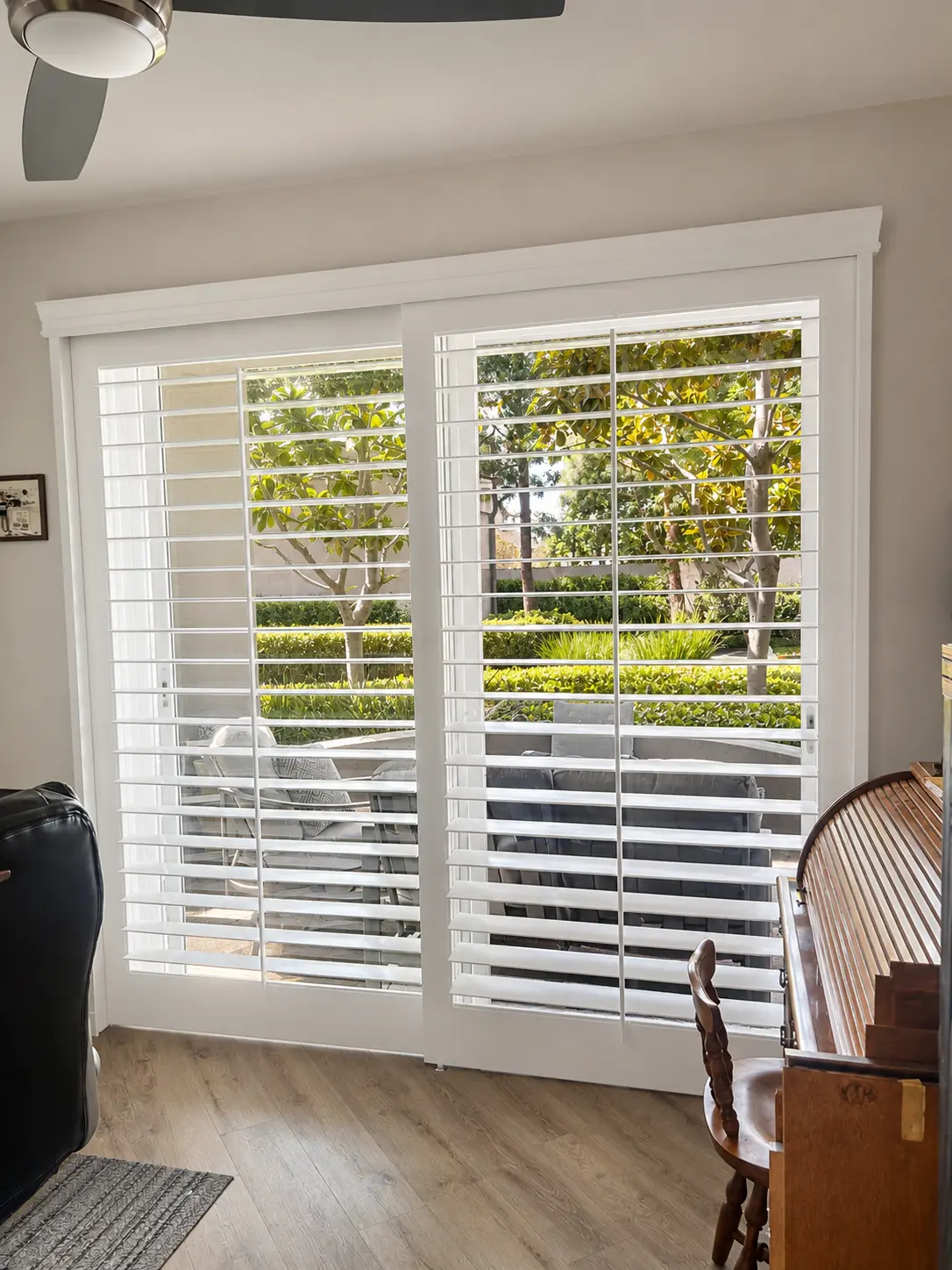
Sliding
Two- and three-track systems for patio doors and wide openings, configured to slide.
Read moreWhat goes into every Polylux panel
- Mitered corners for clean, seamless joints
- Mortised hinges for a flush, integrated fit
- 5-knuckle hinges for smooth operation and long-term support
- Rabbeted panels designed to reduce light gaps
- Fully finished edges, no exposed cuts or shortcuts
- Furniture-grade 30-sheen satin finish, applied in our own spray booth
Polylux vs traditional poly
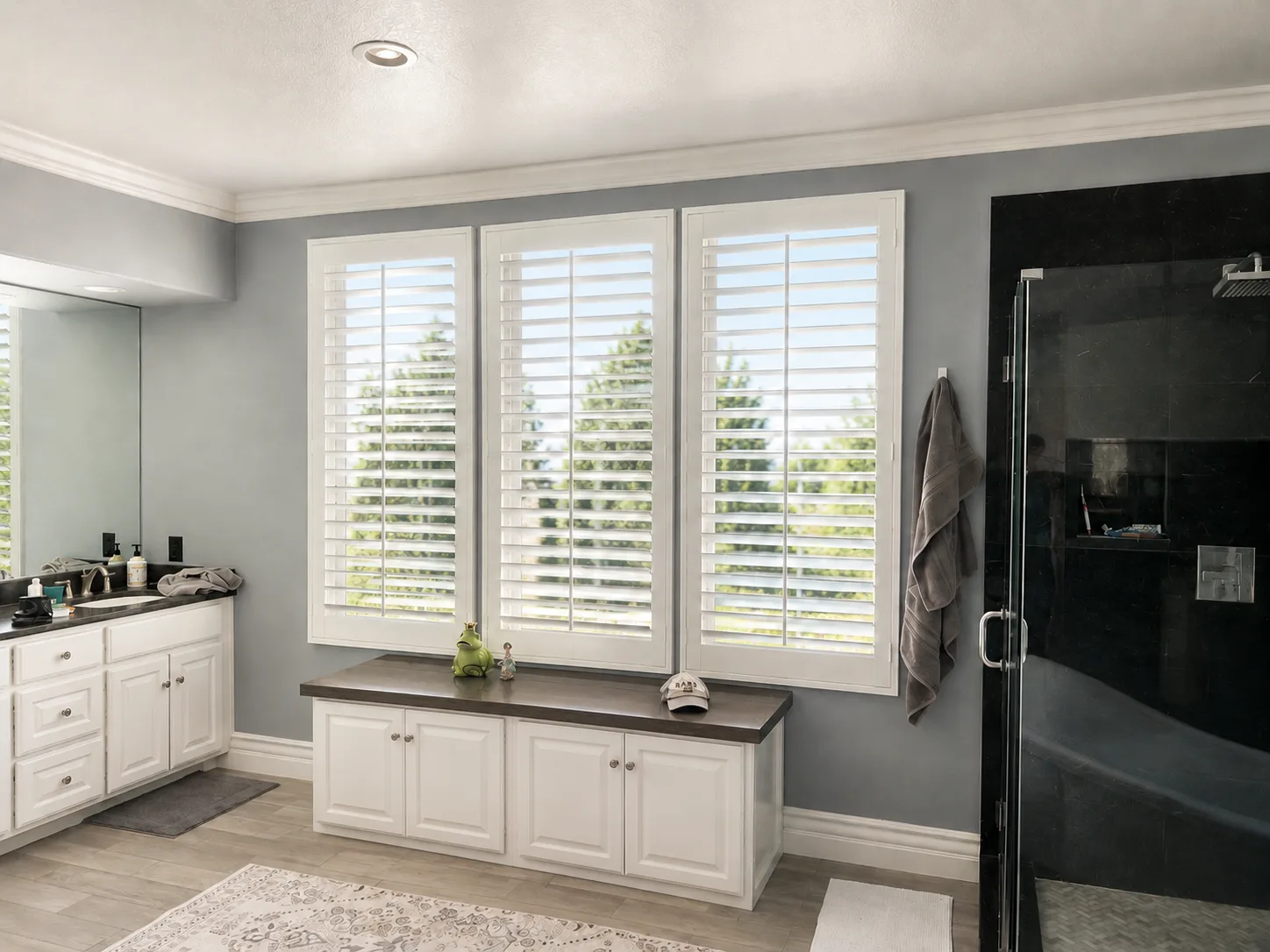
Most poly shutters are fully synthetic, pre-configured, and unpainted. Polylux puts a wood frame behind polyurethane-protected louvers, then paints the whole panel in our own spray booth. That's what lets it span a wide opening and still look like furniture.
Polylux
This page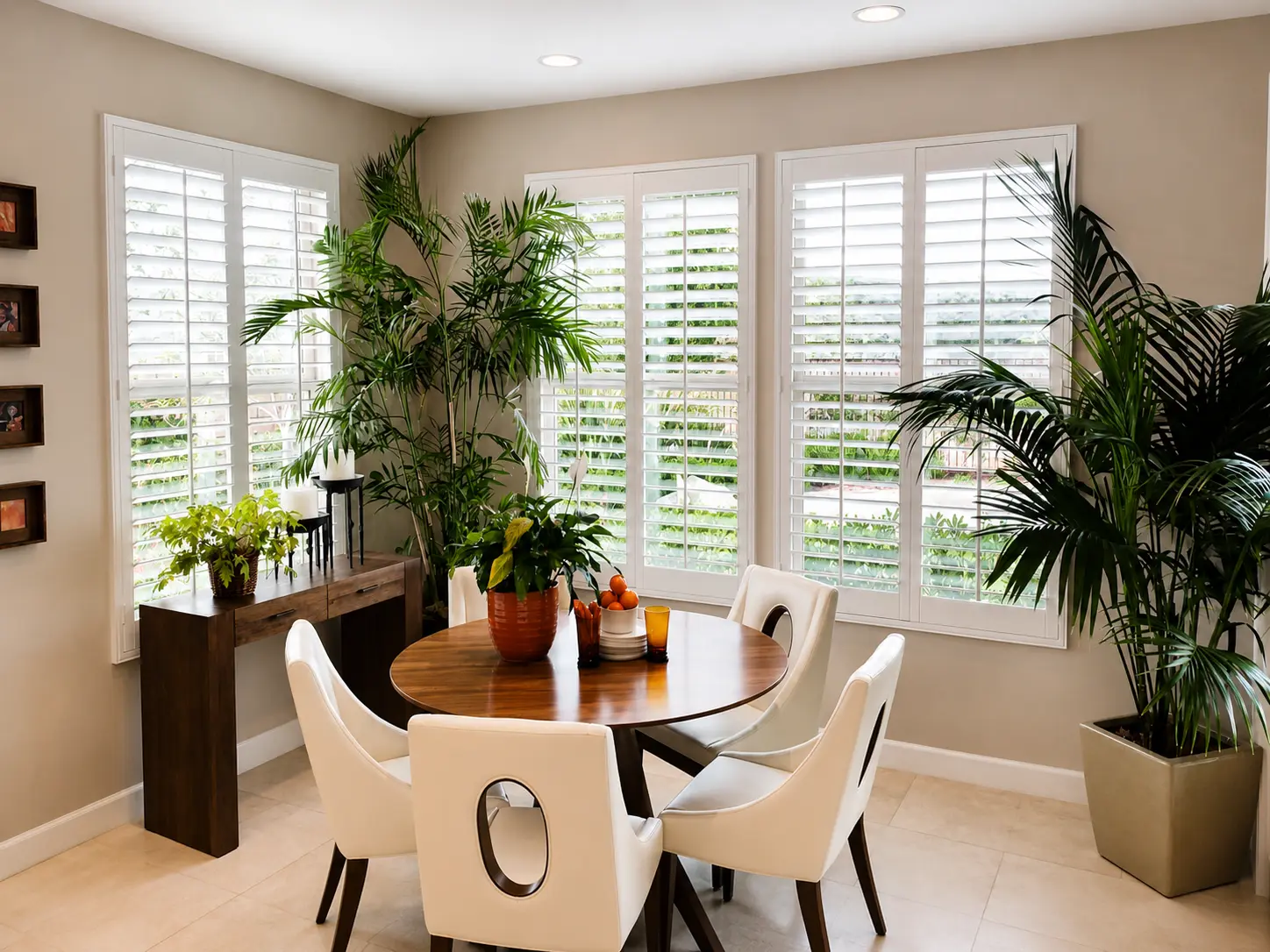
Traditional poly
Common questions
What is a Polylux shutter?
Polylux is our in-house hybrid: a wood frame paired with polyurethane-protected louvers, then painted to a furniture-grade finish. The wood gives the panel its structure, the louvers handle moisture exposure. No one else builds it.
Why not just use poly on a large window?
Poly is heavier than wood and far more flexible, and it caps how wide a single panel can be. On a tall or wide opening that means narrow panels and a cluttered face. Polylux puts a wood frame behind polyurethane-protected louvers, so the panel holds its shape at full width.
Where are Polylux shutters made?
Every Polylux shutter is designed and built at our Lake Forest factory in Orange County. It is not a stocked product. Each one is finished in our own spray booth and custom color matched.
Polylux or standard poly: which should I choose?
Poly for kitchens, laundry rooms, and small or humid bathrooms. Polylux for big, exposed windows, including coastal homes and rooms where the windows stay open. Polylux is also painted with a furniture-grade finish in our own spray booth. Standard poly isn't painted at all.
Ready to see samples?
Visit our Lake Forest factory and showroom, or schedule a free in-home consultation. We measure, recommend materials, and quote, at no cost.